Pulpotomy vs Pulpectomy: Understanding the Difference in Children's Dental Treatment
When a child complains of tooth pain, parents often assume it is a minor cavity that can be fixed with a simple filling. However, when tooth decay reaches the inner part of the tooth, more advanced treatment may be required to save the tooth and prevent infection from spreading.
Two common treatments recommended by paediatric dentists are pulpotomy and pulpectomy. While these procedures may sound similar, they are performed for different reasons and at different stages of infection. Understanding the difference between pulpotomy and pulpectomy can help parents make informed decisions about their child's dental health.
Quick Answer: What Is the Difference Between Pulpotomy and Pulpectomy?
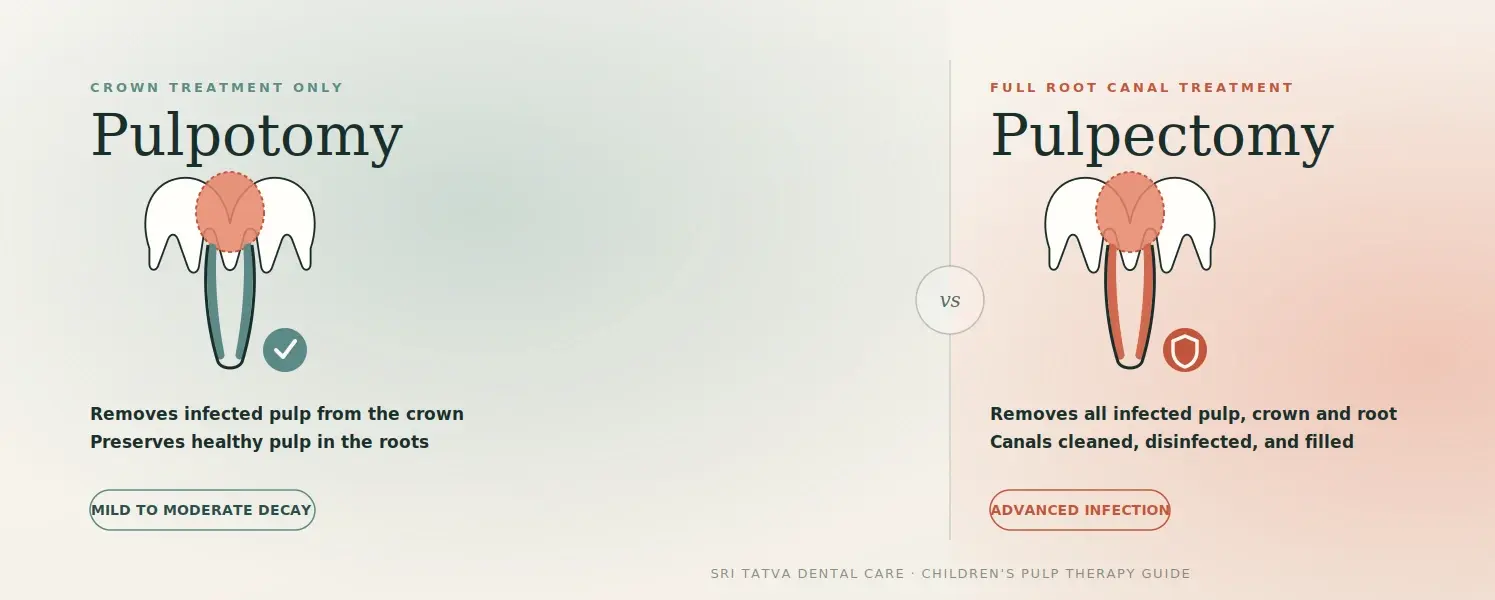
A pulpotomy removes only the infected pulp from the crown portion of a tooth while preserving healthy pulp in the roots.
A pulpectomy removes all pulp tissue from both the crown and root canals when the infection has spread deeper into the tooth.
Both procedures aim to save the tooth and maintain proper oral development.
What Is Dental Pulp?
Inside every tooth is a soft tissue known as the pulp. This contains:
- Nerves
- Blood vessels
- Connective tissue
The pulp helps the tooth develop and remain healthy. When bacteria from deep tooth decay enter this area, the pulp becomes inflamed or infected. At this stage, a filling alone is usually not enough.
Pulpotomy and Pulpectomy — What Each Procedure Involves
While both treatments save an infected baby tooth, they differ in how much pulp tissue is removed and how advanced the infection has become.
- The infected pulp inside the crown of the tooth is removed
- Healthy pulp inside the roots is preserved
- A medicated dressing is placed over the remaining pulp
- The tooth is restored, usually with a stainless-steel crown
- All infected pulp is removed
- Root canals are cleaned thoroughly
- The canals are disinfected
- Special filling material is placed inside the canals
- A protective crown is usually placed over the tooth
When Is a Pulpotomy Recommended?
A paediatric dentist may recommend a pulpotomy when:
- Decay has reached the pulp chamber
- The infection has not spread into the root canals
- There is no abscess
- Root tissue remains healthy
The goal is to preserve the living tissue inside the roots and keep the tooth functional until it naturally falls out.
When Is a Pulpectomy Recommended?
A pulpectomy may be necessary when:
- Infection has reached the root canals
- The child experiences severe pain
- Swelling is present
- An abscess has formed
- The pulp is irreversibly damaged
The aim is to remove infection completely while preserving the tooth.
A pulpotomy treats the crown only and keeps the root pulp alive. A pulpectomy treats the entire tooth — crown and roots — because the infection has already spread there.
🚨 Is Your Child in Severe Pain?
- Severe or throbbing toothache
- Facial, cheek, or gum swelling
- Visible pus, pimple, or abscess on gum
- Fever accompanying dental pain
- Discomfort that disturbs sleep or eating
Pulpotomy vs Pulpectomy: Key Differences
The table below summarises how the two procedures compare across the factors that matter most.
| Feature | Pulpotomy | Pulpectomy |
|---|---|---|
| Amount of pulp removed | Partial (crown only) | Complete (crown & roots) |
| Root pulp | Preserved healthy | Removed & disinfected |
| Infection severity | Mild to moderate | Advanced |
| Procedure complexity | Less complex | More complex |
| Goal | Save healthy pulp | Eliminate deep infection |
Why Saving Baby Teeth Is Important
Many parents believe baby teeth do not need treatment because they eventually fall out. This is a common misconception. Baby teeth play several essential developmental roles:
Maintain Space for Permanent Teeth
They act as natural placeholders and guide permanent teeth into their correct positions.
Help with Chewing & Nutrition
Healthy, pain-free teeth allow children to eat a balanced diet comfortably.
Support Speech Development
Proper dental structure is essential for clear speech and pronunciation.
Prevent Orthodontic Problems
Premature baby tooth loss can lead to crowding, tilting, and future braces.
Baby teeth are not "temporary" in clinical importance — they safeguard jaw growth and adult teeth. Treating infections early prevents extensive damage later.
Is the Treatment Painful?
One of the most common concerns among parents is whether these procedures hurt. The good news is that both pulpotomy and pulpectomy are performed under local anaesthesia.
Children generally experience:
- Minimal discomfort during treatment
- Mild soreness afterwards that responds well to simple medication
- Quick recovery back to play and school
Treatment today focuses on making the experience gentle and stress-free for children, using child-specific communication and comfortable techniques designed for young smiles.
What Happens After Treatment?
After either procedure:
- Mild tenderness may occur for a day or two
- Children can usually return to normal activities and school quickly
- Good oral hygiene should be maintained with gentle brushing
- Follow-up appointments should not be missed
A dental crown (often a stainless-steel or zirconia crown) is placed over the tooth to protect it from fracture and ensure long-term durability until the tooth naturally exfoliates.
Can Pulpotomy or Pulpectomy Be Prevented?
In many cases, yes. Parents can significantly reduce the risk by:
- Ensuring twice-daily brushing with age-appropriate fluoride toothpaste
- Supervising flossing between tight baby molars
- Limiting sticky candies, sugary snacks, and sweetened beverages
- Scheduling regular preventive dental check-ups every 6 months
- Treating minor cavities early with simple fillings before bacteria reach the pulp
Routine dental examinations catch decay at the enamel stage. A simple filling done in time avoids the need for pulpotomy, pulpectomy, or tooth extraction altogether.
Why Choose Sri Tatva Dental Care for Children's Dental Treatment?
At Sri Tatva Dental Care in Hyderabad, we understand that visiting the dentist can be an anxious experience for children and parents alike. Our team provides:
- Child-friendly environment: Welcoming, gentle, and calm atmosphere designed to ease fears.
- Conservative approach: We prioritize saving your child's natural teeth whenever clinically possible.
- Advanced pain management: Modern local anaesthesia and gentle delivery ensure virtually painless care.
- Preventive dentistry guidance: Practical tips and preventive therapies like fluoride application and pit & fissure sealants.
- Transparent communication: We explain every step to parents clearly so you can make confident health decisions.
Frequently Asked Questions
Final Thoughts
Both pulpotomy and pulpectomy are highly effective treatments used to save infected baby teeth. While a pulpotomy preserves healthy pulp within the roots, a pulpectomy clears out infection from the entire canal system when damage is advanced.
The right treatment depends on how deep the infection has travelled. Early diagnosis and timely intervention preserve your child's natural smile, relieve pain, and ensure proper spacing for incoming permanent teeth.
If your child is complaining of tooth pain or sensitivity, do not delay. Schedule an evaluation with our gentle paediatric dental team at Sri Tatva Dental Care.
Worried About Your Child's Tooth Pain?
Don't wait for infection to progress. At Sri Tatva Dental Care in Hyderabad, our team provides gentle, stress-free care for children's dental health. Same-day consultations available.
📞 Call for Appointment: +91 89777 87999 Book OnlineThis article is authored and reviewed by the clinical dental team at Sri Tatva Dental Care, Hyderabad. Our dentists bring experience across general dentistry, paediatric dentistry, and endodontics. All content is intended for patient education and awareness, not as a substitute for professional diagnosis and treatment.

One Response
Great content! Keep up the good work!