
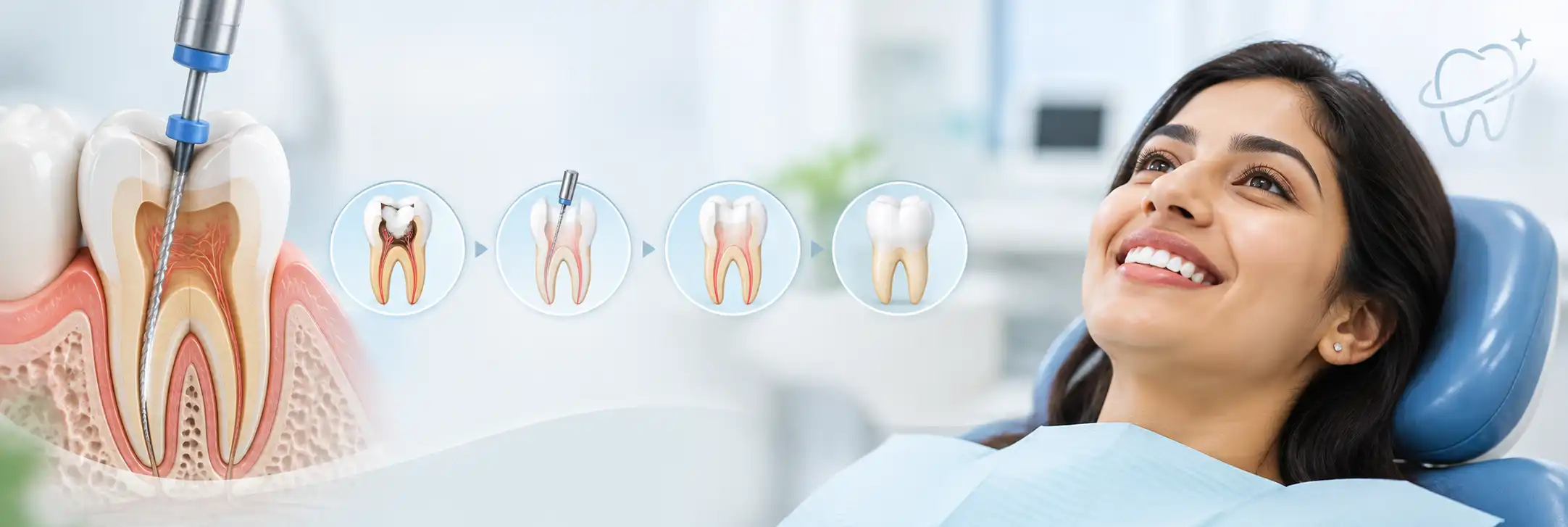
Root Canal Treatment: When It's Needed, What to Expect, and How to Care for Your Tooth Afterward
A toothache that lingers, or a tooth that has suddenly turned sensitive to hot and cold, is often the first sign that decay or infection has reached deep inside the tooth. In many of these cases, the tooth does not need to be removed — it can be saved through root canal treatment.
Root canal treatment has a reputation for being painful, but modern techniques make it one of the more routine procedures in dentistry. Understanding what it actually involves can help you approach the treatment with far less anxiety — and understand why saving the natural tooth is almost always the better outcome.
Quick Answer: What Is Root Canal Treatment?
Root canal treatment (RCT) removes infected or inflamed pulp tissue from inside a tooth, cleans and disinfects the empty canals, and seals them to stop infection from spreading.
It is used when decay, cracks, or repeated dental procedures have damaged the pulp beyond the point where it can heal on its own.
The goal is to eliminate infection while preserving your natural tooth, rather than extracting it.
What Is Inside a Tooth?
Underneath the hard outer enamel and dentin, every tooth has a soft core called the pulp, which contains:
- Nerves
- Blood vessels
- Connective tissue
The pulp keeps the tooth nourished while it is developing. Once a tooth is fully mature, it can survive without the pulp — which is exactly what makes root canal treatment possible. When bacteria reach this layer through deep decay, a crack, or trauma, the pulp becomes inflamed or infected, and the tooth typically cannot heal without treatment.
Signs You May Need a Root Canal
Not every toothache means you need root canal treatment, but certain symptoms are strong indicators that the pulp has become infected.
- Persistent or throbbing tooth pain
- Sensitivity to hot or cold that lingers after the stimulus is gone
- Pain when chewing or applying pressure
- Darkening or discoloration of the tooth
- Tenderness in nearby gums
- Swelling of the face or gums
- A pimple-like bump on the gum (abscess)
- Severe, throbbing pain
- Pus discharge or a bad taste
- Fever alongside tooth pain
In some cases, a tooth with a dead nerve causes no pain at all, which is why infections are sometimes only discovered during a routine dental X-ray.
🚨 Experiencing Severe Pain or Swelling?
- Severe, throbbing pain or facial swelling
- Visible gum abscess or pus discharge
- Pain that keeps you awake at night
- Same-day emergency appointments available
Lingering sensitivity to hot or cold is often the earliest sign of pulp involvement. Don't wait for sharp throbbing pain before getting it evaluated by a dentist.
What Happens During Root Canal Treatment?
The procedure is performed under local anaesthesia and generally follows these stages:
The Clinical Step-by-Step
-
1Diagnosis and X-ray The dentist examines the tooth and takes an X-ray to assess the extent of infection and map the root canals.
-
2Local anaesthesia The area around the tooth is thoroughly numbed so the procedure is completely comfortable.
-
3Accessing the pulp A small, precise opening is made in the crown of the tooth to reach the infected pulp chamber.
-
4Cleaning the canals Infected pulp tissue is removed, and the canals are cleaned and shaped using fine rotary instruments.
-
5Disinfection The canals are thoroughly flushed and disinfected with antibacterial solutions to eliminate bacteria.
-
6Filling and sealing The cleaned canals are filled with a biocompatible material (gutta-percha) and sealed to prevent reinfection.
-
7Restoration A permanent filling or, more commonly, a dental crown is placed over the tooth to restore full strength and chewing function.
Depending on the severity of infection and the tooth involved, treatment may be completed in a single appointment or split across two visits, with a temporary filling placed in between.
Root Canal Treatment: Myths vs Facts
Root canal treatment is one of the most misunderstood dental procedures. Here's how common beliefs compare to reality:
| Myth | Clinical Fact | Pain / Impact Level |
|---|---|---|
| Root canals are extremely painful | The procedure is done under local anaesthesia; most patients report it feels similar to getting a routine filling. | Virtually Painless |
| It's better to just extract the tooth | Saving the natural tooth preserves your bite force, jawbone density, and prevents shifting of nearby teeth. | Preserves Bite |
| Root canals cause illness elsewhere in the body | This century-old myth is completely debunked and not supported by any current scientific or medical evidence. | Safe & Proven |
| You'll need multiple weeks off to recover | Most patients return to school or work the very next day, with only mild, manageable soreness. | 1–2 Days Soreness |
| A root-treated tooth doesn't need a crown | Without a protective crown, a treated tooth becomes brittle over time and is at high risk of fracture. | Crown Recommended |
Why Save the Natural Tooth?
Extraction may seem like the simpler option, but keeping your natural tooth has lasting benefits for your long-term oral health:
Preserves Natural Bite Force
Natural teeth chew and process food far more efficiently than artificial replacements.
Prevents Teeth from Shifting
Neighbouring teeth stay anchored in their correct positions, preventing bite misalignment.
Maintains Jawbone Structure
Natural tooth roots stimulate and keep surrounding jawbone tissue healthy and dense.
Avoids Costlier Replacements
Saving your natural tooth is typically simpler and more affordable than getting a dental implant or bridge later.
Is Root Canal Treatment Really Painless?
The infected pulp itself is often what causes severe pain before treatment — not the procedure. Under modern local anaesthesia, patients typically feel slight vibration or pressure, but no sharp pain during the appointment.
- Complete numbness during the procedure with gentle anaesthesia
- Mild soreness for a day or two afterward as the surrounding tissues heal
- Easy management with standard over-the-counter pain relief, as advised by your dentist
Most patients report that the acute pain they felt before treatment disappears immediately once the infected pulp is removed — the procedure resolves discomfort rather than causing it.
Aftercare and Recovery Tips
Following simple aftercare guidelines ensures swift and uncomplicated healing:
- Avoid chewing on the treated side until the permanent restoration (filling or crown) is placed
- Mild sensitivity or tenderness may last a few days and is normal
- Maintain regular oral hygiene by gently brushing and flossing around the tooth
- Schedule your crown placement promptly to safeguard against tooth fracture
- Attend follow-up check-ups to confirm the bone and tissue are healing properly
A crown is usually recommended afterward, since a root-treated tooth can become more brittle over time and needs protection from heavy chewing forces.
Can Root Canal Treatment Be Avoided?
In many cases, yes — with consistent preventive dental care:
- Brush twice daily with fluoride toothpaste
- Floss daily to remove bacterial plaque between teeth
- Limit sugary, acidic foods and sticky snacks
- Visit your dentist for regular check-ups and cleanings every 6 months
- Treat small cavities immediately before decay reaches the internal pulp chamber
Pain that lingers after hot or cold exposure is one of the earliest warning signs of pulp involvement. Catching it early can sometimes avoid the need for root canal treatment altogether.
Why Choose Sri Tatva Dental Care for Root Canal Treatment?
At Sri Tatva Dental Care, root canal treatment is performed with a focus on comfort, precision, and long-term tooth preservation. Our team provides:
- Painless, anaesthesia-guided treatment: Completely comfortable care from start to finish
- Modern rotary endodontics: Faster, cleaner, and more thorough canal shaping
- High-resolution digital X-rays: Accurate canal length determination and minimal radiation
- Single-visit treatment: Convenient completion in one visit where clinically suitable
- Integrated crown restorations: Seamless same-day or fast-track crowns to protect your tooth
We focus on saving your natural tooth whenever possible, with treatment planned around your comfort every step of the way.
Frequently Asked Questions
Final Thoughts
Root canal treatment has one purpose: to save a tooth that would otherwise need to be removed due to infection or damage. With modern anaesthesia and techniques, the procedure itself is far more comfortable than its reputation suggests, and the relief from pain is often immediate.
If you're experiencing lingering sensitivity, pain when chewing, or swelling near a tooth, don't wait for it to worsen. Early diagnosis makes treatment simpler and gives your tooth the best chance of a long, healthy life.
Dealing With Tooth Pain?
Don't wait for it to get worse. At Sri Tatva Dental Care in Hyderabad, our team provides gentle, precise root canal treatment to save your natural tooth. Same-day consultations available.
📞 Call for Appointment Book OnlineThis article is authored and reviewed by the clinical dental team at Sri Tatva Dental Care, Hyderabad. Our dentists bring experience across general dentistry, paediatric dentistry, and endodontics. All content is intended for patient education and awareness, not as a substitute for professional diagnosis and treatment.
