Smile Makeover: What Are Your Options? (And Veneers vs. Crowns: What’s the Difference?)
A smile plays a significant role in first impressions, confidence, and self-esteem. While some patients want to correct a single damaged, discoloured, or unevenly shaped tooth, others are looking for a comprehensive transformation. Two of the most commonly recommended treatments in smile transformations are dental veneers and crowns—and patients are often unsure which one applies to their situation.
Two of the most common questions patients ask at Sri Tatva Dental Care are, “What treatments are actually included in a smile makeover?” and “Do I need a veneer or a crown?” If you’re considering transforming your smile, understanding how each treatment works and how they come together can help you make an informed decision.
Quick Answer: Smile Makeovers, Veneers & Crowns
A smile makeover combines multiple treatments—such as whitening, veneers, crowns, bonding, orthodontics, or implants—into one coordinated, personalized plan based on your specific aesthetic and functional goals.
Within that plan, the choice between veneers and crowns comes down to coverage and purpose: Veneers cover only the visible front surface of structurally healthy teeth for cosmetic enhancement, whereas crowns fully encase the entire tooth (360°) to restore strength, protection, and appearance to weakened or damaged teeth.
- Quick Answer
- What Is a Smile Makeover?
- Planning & Diagnosis
- Veneers vs. Crowns
- Side-by-Side Table
- Step-by-Step Process
- All Treatment Options
- Problems Corrected
- Benefits of Each
- Treatment Timelines
- Candidate Suitability
- Longevity & Care (Do's/Don'ts)
- Reversibility & Teens
- Why Sri Tatva
- Frequently Asked Questions
What Is a Smile Makeover?
A smile makeover is a personalised treatment plan that combines two or more cosmetic and restorative dental procedures to improve the overall appearance and function of your smile. Rather than treating a single tooth in isolation, it considers your teeth, gums, bite, and facial features together to create a natural, balanced result.
No two smile makeovers are exactly alike, since each is built around the patient’s individual dental architecture, facial proportions, and personal concerns.
The Planning Behind a Smile Makeover
Many patients assume a smile makeover means undergoing every possible cosmetic procedure. In reality, the process is far more selective and is based on careful clinical diagnosis.
Your dentist evaluates several factors before recommending treatment, including:
- The condition and structure of your existing teeth
- Your gum health and gumline symmetry
- Your bite and jaw alignment
- Your facial proportions and lip line
- Your personal goals and priorities
This assessment ensures that only the treatments that are actually needed are included in your plan, avoiding unnecessary procedures while ensuring structural longevity.
Dental Veneers vs. Crowns: What’s the Difference?
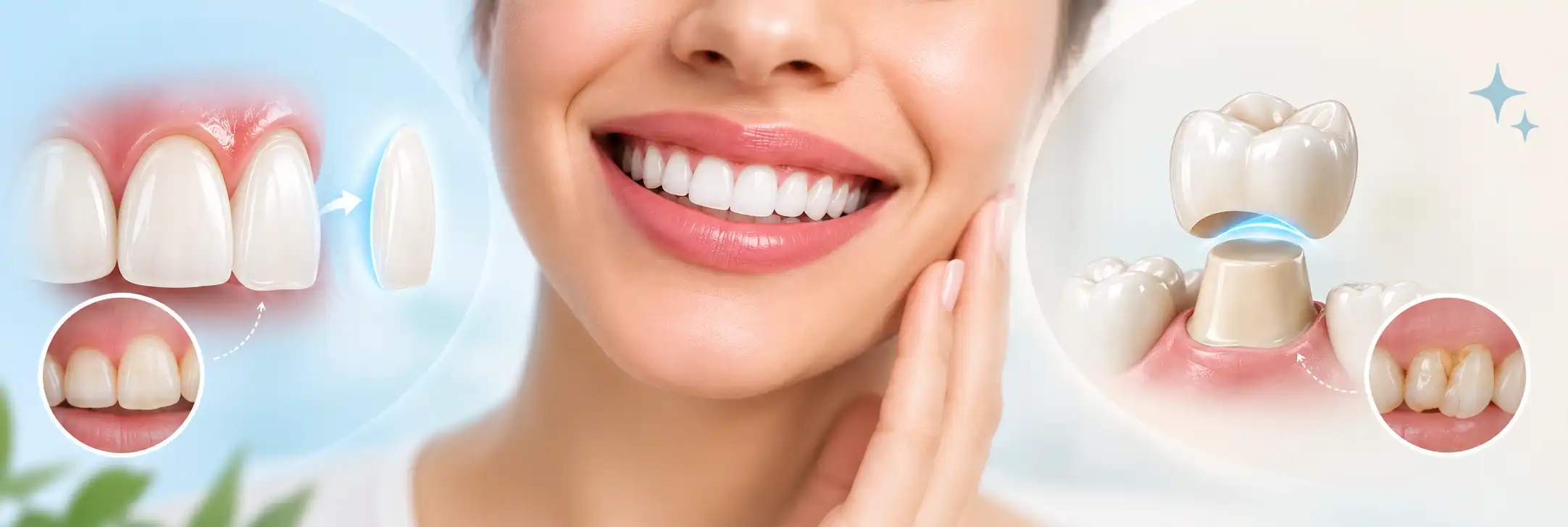
Because both veneers and crowns can produce a whiter, straighter, and more uniform smile, patients often find it difficult to picture how they differ. The distinction comes down to coverage and purpose:
- Thin, custom-made porcelain or composite shells bonded to the front surface
- Only a thin layer of enamel is removed from the visible front
- The back and sides of the tooth remain untouched
- Best suited for structurally sound teeth with visual imperfections
- Tooth-shaped coverings that fit over the entire visible tooth
- The entire tooth is reshaped and reduced in size
- Provides full structural protection against heavy bite forces
- Essential for teeth weakened by decay, fracture, or root canal treatment
Veneers are primarily a cosmetic solution for healthy teeth that need visual enhancement. Crowns serve both a restorative and cosmetic purpose, protecting teeth that have lost structural integrity.
A veneer enhances the front surface of a healthy tooth, while a crown protects the entire tooth after damage or a root canal. In a comprehensive smile makeover, both are often strategically combined!
Side-by-Side Comparison: Veneers vs. Crowns
Here is how veneers and crowns compare across key clinical factors:
| Feature | Dental Veneers | Dental Crowns |
|---|---|---|
| Coverage | Front visible surface only | Entire tooth (360-degree encasement) |
| Tooth Preparation | Minimal enamel reduction (0.3mm–0.7mm) | Substantial reduction on all sides |
| Primary Purpose | Cosmetic improvement | Restorative strength & protection |
| Condition of Tooth | Structurally sound and healthy | Damaged, cracked, decayed, or root-treated |
| Bite Resistance | Moderate (ideal for front teeth) | High (withstands heavy chewing & molars) |
| Lifespan | 10–15 years (Porcelain) / 5–7 years (Composite) | 10–15+ years |
Step-by-Step Treatment Process
Whether you undergo a multi-treatment smile makeover or targeted veneer and crown placements, care at Sri Tatva Dental Care follows a meticulous, structured sequence:
The Clinical Journey
-
1Initial Consultation & Examination The journey begins with a detailed dental examination. Your dentist assesses teeth alignment, staining or discolouration, remaining enamel, extent of decay or fractures, gum health and symmetry, bite relationship, and your aesthetic goals. Digital scans, photographs, or impressions are taken to plan treatment precisely.
-
2Digital Smile Design (DSD) Many smile makeovers begin with digital planning. This allows your dentist to preview potential results before treatment begins, map out which procedures are needed and in what order, estimate timelines, and adjust the design based on your feedback before any tooth preparation begins.
-
3Treatment Sequencing & Foundation Care Since a smile makeover often involves multiple procedures, treatment is phased in a specific order. For example, underlying decay, root canals, orthodontic alignment, or gum contouring must be completed before permanent veneers or crowns are prepared.
-
4Tooth Preparation & Temporary Placement For veneers, a thin layer of front enamel is gently removed; for crowns, the tooth is reshaped from all angles. Precision digital scans are sent to a specialized lab for custom fabrication, and temporary restorations are placed to protect your teeth in the interim.
-
5Final Fitting, Bonding & Maintenance Once ready, the permanent restorations are checked for exact fit, colour match, and bite harmony before being permanently bonded or cemented. Follow-up visits verify comfort and long-term stability.
All Smile Makeover Treatment Options
A smile makeover combines one or several of the following cosmetic and restorative procedures based on your personal plan:
Teeth Whitening
Professional whitening lightens stained or discoloured teeth using dentist-supervised bleaching agents. It’s often the starting point of a smile makeover, since a brighter baseline shade makes other cosmetic work look more cohesive.
Dental Veneers
Thin, custom-made porcelain or composite shells bonded to the front of teeth to correct chips, gaps, discolouration, or irregular shapes, creating a uniform, symmetrical appearance.
Dental Bonding
Composite resin sculpted directly onto teeth to repair minor chips, cracks, or small gaps in a single visit, offering a quicker, more affordable alternative to veneers.
Dental Crowns
Full 360° caps that restore the shape, strength, and appearance of a damaged or weakened tooth, often used after root canal treatment or extensive decay.
Orthodontics or Clear Aligners
Crooked, crowded, or misaligned teeth can be corrected using traditional braces or clear aligners, improving both cosmetic appearance and bite function.
Dental Implants
For missing teeth, implants provide a permanent, natural-looking replacement that supports jawbone health and prevents surrounding teeth from shifting.
Gum Contouring
This minor procedure reshapes an uneven or excessive "gummy" gumline, helping create a more balanced, proportionate smile and optimal tooth exposure.
What Dental Problems Can Be Corrected?
Together, smile makeover procedures, veneers, and crowns can correct a comprehensive range of concerns:
- Discolouration or staining that doesn’t respond to whitening
- Small enamel chips or minor cracks
- Minor gaps between teeth (diastemas)
- Slightly misshapen or uneven teeth
- Teeth with extensive decay or large failing fillings
- Cracked or fractured teeth requiring structural reinforcement
- Teeth after root canal treatment
- Covering and restoring a dental implant
- Severely worn teeth requiring full bite reconstruction
Benefits of Veneers and Crowns
Understanding the unique advantages of each option helps clarify why dentists often recommend a combination of both in a smile makeover:
Benefits of Veneers
• Minimal Tooth Reduction: Only a thin layer of front enamel is removed, preserving natural tooth structure.
• Natural Translucency: Porcelain closely mimics natural tooth enamel and resists staining.
• Fast Transformation: Corrects multiple aesthetic flaws in just a couple of appointments.
Benefits of Crowns
• Full Structural Protection: Reinforces brittle or compromised teeth against fracture.
• Long-Term Durability: Withstands heavy biting force on premolars and molars.
• Comprehensive Restoration: Saves teeth that are too damaged for veneers or bonding.
How Long Does Treatment Take?
Treatment duration depends entirely on which procedures are included in your plan:
| Procedure | Typical Duration | Timeline Category |
|---|---|---|
| Whitening or Composite Bonding | Often completed within 1 to 2 visits | 1–2 Visits |
| Porcelain Veneers or Crowns | Typically 2 visits spaced 1 to 2 weeks apart | 1–2 Weeks |
| Gum Contouring | 1 visit; heals within 1 to 2 weeks | 1 Visit |
| Orthodontic Correction (Braces/Aligners) | 6 months to 2 years, depending on complexity | 6–24 Months |
| Implant-Based Treatment | Several months (due to bone healing time) | Phased Healing |
Is a Smile Makeover, Veneer, or Crown Suitable for Everyone?
Although these treatments are highly effective and customizable, they are not interchangeable.
- Patients with structurally healthy teeth and intact enamel
- Those seeking cosmetic improvement rather than structural repair
- Teeth with minor chips, gaps, or stubborn discolouration
- Patients with significant decay, large fillings, or fractures
- Teeth that have undergone root canal treatment
- Cases requiring both structural strength and aesthetic restoration
Patients with active decay or gum disease will usually need this addressed before cosmetic treatment begins, to ensure long-lasting results. A professional evaluation is essential to determine which combination of treatments is right for you.
Longevity and How to Care for Your Smile
Treatment longevity varies depending on the material chosen and your daily hygiene habits:
- Porcelain veneers: typically last 10–15 years
- Composite veneers: typically last 5–7 years
- Dental crowns: typically last 10–15 years, and often longer with diligent maintenance
Proper care helps maintain both durability and appearance:
✅ Do:
• Brush and floss daily as you would natural teeth
• Attend regular dental check-ups and professional cleanings
• Wear a night guard if you grind or clench your teeth (bruxism)
❌ Don't:
• Bite down on very hard foods, ice, or pens
• Use your teeth as tools to open packaging
• Skip routine dental examinations
Reversibility and Age Considerations
Some treatments, like whitening or clear aligners, don't permanently alter your teeth. Others, like porcelain veneers or crowns, involve enamel removal and are considered long-term, permanent commitments—meaning the tooth will always need a veneer or crown going forward.
Some treatments, like bonding or clear aligners, may be suitable for teenagers. However, options requiring permanent enamel reduction (veneers and crowns) or bone anchorage (implants) are generally reserved for adults with fully developed teeth and jaws.
Why Choose Sri Tatva Dental Care?
At Sri Tatva Dental Care, we combine careful diagnosis with personalised treatment planning to help patients choose the right restoration for their needs.
Our multidisciplinary team evaluates each case individually and creates customised treatment plans designed to deliver natural-looking, long-lasting results:
- Digital Smile Design: Preview your potential results before starting any treatment.
- Conservative Approach: Preserving as much natural tooth structure as possible.
- Multi-Specialty Care: Cosmetic dentists, orthodontists, endodontists, and implantologists under one roof.
- Premium Biocompatible Materials: High-grade porcelain, lithium disilicate (E-max), and zirconia for lifelike strength.
- Transparent Consultation: Clear treatment sequences, timelines, and cost breakdowns.
✨ Ready for a Smile Assessment?
- Personalised Digital Smile Design preview
- Detailed veneer vs. crown assessment
- Minimally invasive options prioritized
- Customized treatment roadmap
Frequently Asked Questions
Final Thoughts
A smile makeover isn’t a single procedure—it’s a coordinated plan built around your unique smile and goals. Whether you need veneers to enhance the appearance of healthy teeth, crowns to restore damaged teeth, or a combination of treatments, the right plan can help you achieve a smile you feel confident sharing.
The right choice depends on the specific condition of your teeth. Scheduling a consultation can help you understand your options and begin your journey towards a smile you love.
Ready to Transform Your Smile?
A smile makeover offers a flexible, personalised path to improving both the appearance and function of your teeth. If you’re considering veneers, crowns, or a full smile transformation, the dental team at Sri Tatva Dental Care can assess your smile, recommend the most suitable treatment, and guide you through every step of the process.
📞 Call for Appointment Book OnlineThis article is authored and reviewed by the clinical dental team at Sri Tatva Dental Care, Hyderabad. Our dentists bring experience across cosmetic dentistry, prosthodontics, orthodontics, and restorative smile aesthetics. All content is intended for patient education and awareness, not as a substitute for professional diagnosis and treatment.
